Mattress Topper vs Mattress Pad: Which Do You Need?
A pad adds a thin, washable layer; a topper changes how the bed feels. How they differ, where a protector fits in, and why the name on the listing is not a reliable guide.
Research-based: public sources and consumer feedback, not hands-on testing. How we review
As an Amazon Associate we earn from qualifying purchases. If you buy through links on this page we may earn a commission, which never affects what we write. Learn more
In this article
Quick Verdict
Bottom line: A pad and a topper do different jobs. A pad is a thin, washable comfort layer; a topper is the one that changes how the bed feels.
- Best for
- A pad suits sleepers who like their mattress and want light cushioning that is easy to wash
- Main concern
- Expecting a pad to soften a hard mattress, or a topper to keep spills out
- Better alternative
- A topper, if you want a real change in feel
Research-based: public sources and consumer feedback, not hands-on testing. How we review
Quick answer
Choose a mattress pad if you like your mattress and want a little extra softness plus a washable layer between you and it. Choose a topper if you want to change how firm or soft the bed feels. If the aim is to keep spills out, neither is the right tool: that is a protector’s job.
Mattress pads and mattress toppers sit in the same place, under the fitted sheet, and stores often list them side by side. They are built to do different things. Buying the wrong one is an easy mistake: a pad will not soften a hard mattress, and a topper is bulky to wash and awkward to return.
This comparison is about which of the two to buy. If you already know you want a topper, our mattress topper buying guide covers material, thickness and return terms.
Pad, Topper and Protector Compared
| Product | Best for | Main strength | Main weakness | Overall assessment |
|---|---|---|---|---|
| Mattress pad | People happy with their mattress who want light cushioning | Thin, usually machine washable and generally cheaper | Too thin to change firmness in any real way | A comfort and hygiene layer |
| Mattress topper | People who want the bed to feel softer or firmer | Thick enough to change the feel and add pressure relief | Bulky, harder to clean and generally dearer | The one that changes the bed |
| Mattress protector | Keeping liquid, dust and allergens out of the mattress | Protects while leaving the feel almost unchanged | Waterproof layers can limit airflow, and some rustle | Protection, not comfort |
What each one is
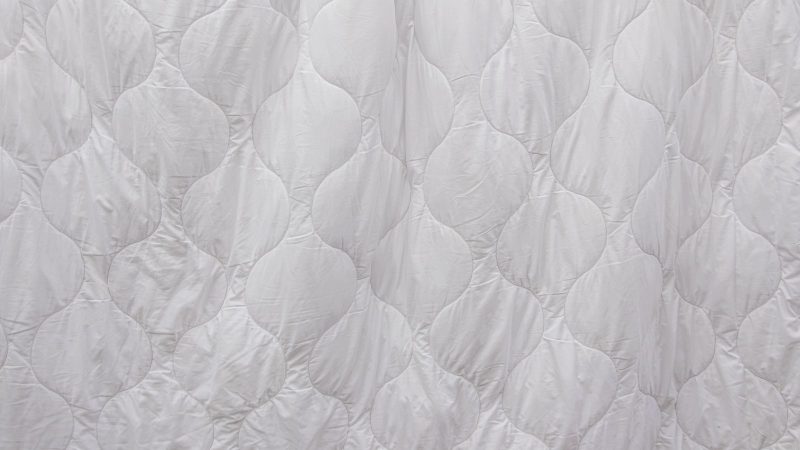
A mattress pad is a thin, usually quilted layer. The Sleep Foundation puts pads at one to two inches thick at most, commonly filled with polyester fiber, feather or wool. Some fit over the mattress with an elastic skirt, like a fitted sheet; simpler ones lie flat and rely on the sheet to hold them.
A mattress topper is a thicker slab or fill layer, about one to four inches according to the Sleep Foundation, made of memory foam, latex, wool or feather. It is meant to change the firmness of the bed noticeably, and usually is not designed to keep liquid out.
A mattress protector is a thin cover designed only to protect. Fitted versions cover the top; zipped encasements cover every side.
Federal flammability rules draw a similar line. The standard for mattresses and mattress pads (16 CFR Part 1632) defines a mattress pad as a thin, flat mat or cushion for use on top of a mattress. The separate open-flame standard (Part 1633) names mattress pads and mattress toppers as two items, and places both outside its definition of a mattress.
Where a mattress pad does better
- Washing. Care varies by model, but the Sleep Foundation says most pads can be machine washed and dried. That is the main practical advantage.
- Cost. Both the Sleep Foundation and Mattress Clarity describe pads as generally cheaper than toppers.
- Some protection. A pad shields the mattress from dirt and minor spills, and some models help with dust and allergens. The Sleep Foundation also describes pads as a quieter option than protectors.
- Staying put. A pad with an elastic skirt is held on like a fitted sheet.
Where a mattress topper does better
- Changing the feel. This is the whole point of a topper. It can make a bed softer or firmer, in a way a pad of an inch or so cannot.
- Pressure relief. Consumer Reports’ home editor says a topper can relieve pressure points for back and side sleepers and make a good mattress more comfortable.
- A slightly uneven surface. The Sleep Foundation says a topper can compensate for slight sagging. Consumer Reports is firm that it will not fix a mattress that has lost its support, so treat this as covering a minor dip, not a repair.
Drawbacks they share
- Neither revives a worn-out mattress. Both lie on top of whatever is underneath and follow its shape.
- Either can make the bed warmer. It depends on the material. A foam topper is the likelier culprit; see why a mattress topper sleeps hot for how to tell which layer is responsible.
- Both add height. Consumer Reports notes that a topper adds from one to four inches, which can be too much for standard fitted sheets.
- The names are used loosely. The published ranges overlap: up to two inches for a pad and from one inch for a topper, so a two-inch product could be sold as either. Go by the thickness and what it is made of, not the word in the title.
Can you use both?
You can, though the sources we read do not recommend stacking a pad and a topper. Mattress Clarity’s advice is to choose one topper with the right cushioning instead of layering the two. A protector is different: it can go over a pad or a topper, which keeps the topper clean as well as the mattress. The order from the bottom up is mattress, topper, protector, fitted sheet.
Who a Mattress Pad May Suit
- Sleepers who like their mattress and want it slightly softer
- Anyone who wants a layer they can put through the washing machine
- Buyers who want to spend less and change less
Who Is Better Off With a Topper
- People whose mattress is sound but clearly too firm or too soft
- Side and back sleepers looking for pressure relief at the shoulders and hips
- Anyone prepared to accept a bulkier layer that is harder to clean
How we researched this
We compared the Sleep Foundation’s and Mattress Clarity’s published explanations of the two products, the Sleep Foundation’s guide to mattress protectors, Consumer Reports’ topper advice as reported by a US news station, and the definitions in the two federal mattress flammability standards. We did not test any pad or topper, and the thickness ranges are the sources’ figures, not our measurements.
Which Do You Need?
A pad for a light, washable layer; a topper to change how the bed feels
If your mattress is comfortable and you want to keep it clean with a touch more softness, a pad does that for less money and less bulk. If you lie down and think the bed is too hard or too soft, a pad will not change that, and a topper is the product to look at. In that case start with the buying guide, and check the return terms before you unroll anything.
Better choice for some buyers
A quilted mattress pad
As an Amazon Associate we earn from qualifying purchases. How this works
Frequently Asked Questions
Is a mattress pad the same as a mattress topper?
No. A pad is a thin layer, usually one to two inches at most, that adds a little softness and some protection. A topper is thicker and is meant to change how firm or soft the bed feels.
Will a mattress pad make a hard mattress softer?
Only slightly. The Sleep Foundation says a pad does not drastically change firmness. If the mattress feels hard, a topper is the product designed for that.
Are mattress pads waterproof?
Do not assume so. Some resist spills, but the Sleep Foundation notes that even products sold as protectors are not all waterproof. Look for the word in the product description if you need it.
Which goes on first, the topper or the protector?
The topper goes on the mattress and the protector goes over it, under the fitted sheet. That way the protector keeps the topper clean as well as the mattress.
Can I put a mattress pad over a topper?
You can, but Mattress Clarity advises against stacking the two and suggests choosing a single topper with the right amount of cushioning. If you want a washable layer over a topper, a thin protector is the usual choice.
Sources & Evidence
Where the facts in this article come from. Summaries are in our own words; follow the links to check them yourself.
- Sleep Foundation: Mattress Pad vs. Mattress Topper
- Mattress Clarity: Mattress Pad vs Mattress Topper
- Sleep Foundation: Best Mattress Protectors
- KOMO News: Consumer Reports, mattress topper or a new mattress? (2022)
- 16 CFR 1632.1, definitions in the flammability standard for mattresses and mattress pads (Cornell Legal Information Institute)
- 16 CFR 1633.2, definitions in the open-flame mattress standard (Cornell Legal Information Institute)
More on: Mattresses & Bedding