E-Bike and Scooter Battery Recalls
Lithium-ion batteries are behind a series of US recalls and warnings for e-bikes, scooters and hoverboards; here are the main ones, why some come with no remedy, and how to charge and dispose of a battery safely.
Research-based: public sources and consumer feedback, not hands-on testing. How we review
In this article
The lithium-ion battery is what makes an e-bike or electric scooter useful, and it is also the part behind many of the safety notices issued for these products. A failing pack can catch fire quickly and without much warning, sometimes while it is not even charging. This page summarizes the main battery-related recalls and warnings the US Consumer Product Safety Commission (CPSC) has issued for e-bikes, scooters and hoverboards, explains why several of them are warnings with no remedy attached, and sets out the CPSC’s advice on charging and disposal.
If your battery is listed
Stop using it and stop charging it. Take the battery off the bike or scooter if it is removable, and store it away from anything that can burn until you can dispose of it. Do not put a lithium-ion battery in household trash or curbside recycling; take it to a household hazardous waste site.
Key takeaways
- The CPSC warned owners in November 2025 to stop using three Rad Power Bikes battery models after 31 reports of fire
- It issued a similar warning for Ridstar Q20 and Q20 Pro e-bikes after 11 reports of fire
- About 24,000 VIVI e-bike batteries were recalled in July 2025, with a free replacement battery
- A warning is not a recall: where a company has not agreed to one, there is no refund or replacement to claim
- The CPSC advises never charging these batteries while you are asleep
Recalls and warnings at a glance
| Product | Action and date | Reported hazard | Remedy |
|---|---|---|---|
| Rad Power Bikes batteries RP-1304, RAD-S1304Y and HL-RP-S1304 | CPSC warning, November 24, 2025 | Batteries can ignite and explode, especially after exposure to water or debris | None agreed |
| Ridstar Q20 and Q20 Pro e-bikes | CPSC warning, 2026 | Batteries and wiring can ignite | None agreed |
| VIVI e-bikes with 36-volt batteries | Recall, July 2025 | Batteries can overheat | Free replacement battery |
| FENGQS F7 Pro e-bikes, sold on Amazon | CPSC warning, then recall, 2025 | Batteries can ignite | Refund |
| Santa Cruz Heckler 9 e-bikes | Recall, May 1, 2025 | Battery can overheat | Replacement |
| Transpro US scooters (A3 Hub Motor, A11F Spark, R1 Commuter) | Recall, July 2025 | Sold with unauthorized UL certification labels on the battery; fire and burn hazards | See notice |
| Swagtron SG-5 Swagger 5 Boost Commuter scooters bought at Walmart or Sam’s Club | Recall by Walmart, 2025 | Batteries can overheat and ignite | See notice |
| Jetson 42-volt Rogue hoverboards | Recall, 2023 | Battery packs can overheat | See notice |
Details are from the CPSC notices linked under Sources. We could not confirm which remedy programs remain open. Where the table says “see notice”, we could not read the remedy in the notice text available to us.
What the incident reports say
These are the figures in each CPSC notice at the time it was issued. Dollar amounts are the property damage reported to the agency.
Rad Power Bikes batteries
The CPSC was aware of 31 reports of fire, including 12 reports of property damage totaling about 734,500 dollars. It says some fires happened when the battery was not charging and the bike was not in use. The batteries were sold with several Rad models, including the RadWagon 4, RadRunner 1 and 2, RadRunner Plus and RadExpand 5, and separately as replacements. The model number is on a label on the back of the battery.
Source: CPSC warning 26-118
Ridstar Q20 and Q20 Pro
Eleven reports of fire, including one burn injury, five reports of smoke inhalation and two reports of property damage totaling more than 40,000 dollars. The CPSC says the manufacturer, based in China, refused to agree to an acceptable recall.
Source: CPSC warning on Ridstar e-bikes
VIVI e-bike batteries
VIVI knew of 14 reports of batteries overheating, three of them fires, with no injuries. The bikes were sold online between December 2020 and November 2023.
Source: CPSC: VIVI recall
Swagtron scooters sold by Walmart
Seven reports of batteries overheating, smoking, melting or catching fire, one of which caused a burn injury and damage to an apartment building. The notice says the manufacturer did not respond to the CPSC’s request for a recall, so the retailer recalled the units it had sold.
Source: CPSC recall 25-138
Transpro scooters
About 700 scooters. One reported fire caused at least 200,000 dollars of property damage. The point to note is the label: the batteries carried UL certification marks they were not authorized to use.
Source: CPSC: Transpro US recall
Jetson Rogue hoverboards
About 53,000 units. The notice reports that two children died in a house fire linked to one of these hoverboards. It is the most serious outcome among the notices we read.
Source: CPSC: Jetson recall
Why some of these are warnings, not recalls
A recall comes with a remedy the company has agreed to. When a company does not agree to a recall the CPSC considers acceptable, the agency can warn the public on its own, and that is what happened with the Rad Power Bikes and Ridstar notices, and with an earlier 2024 warning about Unit Pack Power batteries.
For owners the difference is practical: there is no refund or replacement program to claim from. In the Rad Power Bikes notice the CPSC says the company told it that it could not offer replacement batteries or refunds to all owners. Rad has said that its newer Safe Shield and semi-integrated batteries are not covered by the warning and that independent laboratories retested the affected packs and passed them. The CPSC’s advice to stop using the listed batteries stands regardless. Our guide to how recall refunds work explains what options remain when there is nothing to claim.
How to check yours
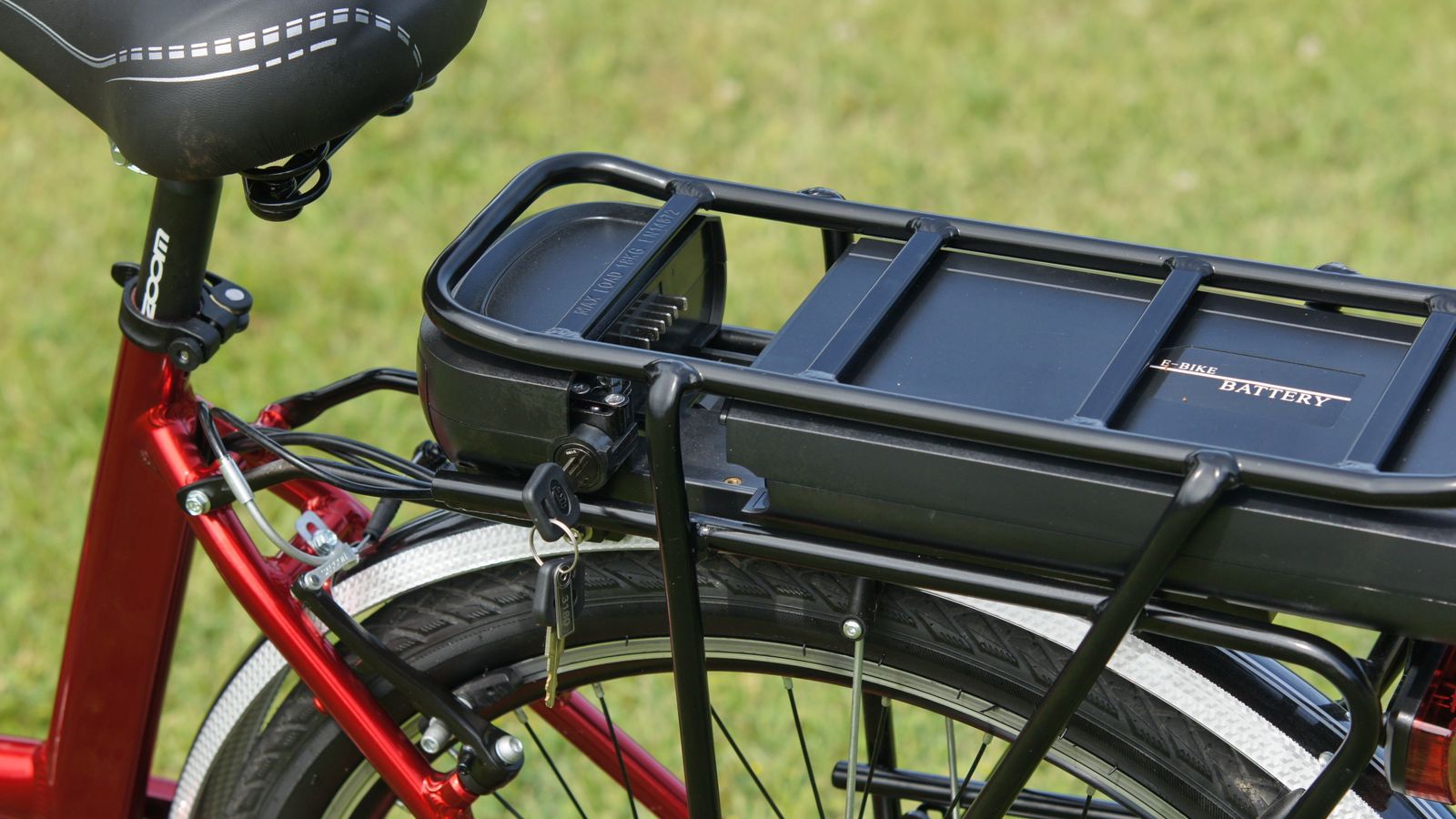
- Find the battery’s own label. Several of these notices are about a battery model, not a bike model. The Rad numbers, for example, are printed on the back of the battery.
- Check the date code where the notice gives one.
- Search the CPSC site for both the bike or scooter brand and the battery brand. Our guide to checking whether a product has been recalled shows how.
- Check any replacement or second battery too. Batteries sold separately are often covered by the same notice.
How big is the problem?
The CPSC’s most recent report on these products, published in April 2026, counts 533 deaths associated with e-bikes, e-scooters and hoverboards from 2017 to 2024, the large majority of which did not involve a battery fire. Of the total, it attributes 19 e-bike deaths, 15 e-scooter deaths and 11 hoverboard deaths to fires involving lithium-ion batteries. Its earlier analysis found that most reported fires started while the device was charging or just after.
Battery fires are a minority of those deaths. The reason to take them seriously is where and when they happen: the CPSC notes that many lithium-ion battery fires in homes start at night, while a battery is charging and the household is asleep.
Charging and storing any e-bike or scooter battery
The CPSC’s guidance for micromobility products:
- Be present while the battery charges. Never charge it while you are asleep.
- Use only the charger supplied with the device.
- Use only an approved replacement battery. Never use a pack that has been modified or rebuilt by someone unqualified, or one made from used cells.
- Buy devices and batteries certified to the relevant safety standards: UL 2849 for e-bikes, UL 2272 for scooters and hoverboards, and UL 2271 for battery packs.
- Never put a lithium battery in the trash or general recycling. Take it to a battery recycler or a hazardous waste collection center.
A certification mark is worth having but is not proof on its own: the Transpro recall above involved labels the batteries were not entitled to carry. The same care applies to smaller lithium products; see our summary of power bank recalls. Our lithium battery safety guide covers charging, storage and disposal for every kind of battery product, and how to spot a failing battery lists the warning signs.
Is a mandatory standard coming?
The standards above are voluntary at federal level. In June 2026 the CPSC approved for public comment a proposed mandatory safety standard for lithium-ion batteries in these products. It is a proposal, not a rule, and we found no indication that it has been finalized.
How we researched this
This summary is based on CPSC recall notices, CPSC warnings and the agency’s published report and guidance on micromobility products. We did not test any battery. We name a company only where a CPSC notice does, and the incident figures are those in each notice when it was issued. A warning or recall about one battery or model is not a finding about a company’s other products.
Frequently Asked Questions
Which e-bike batteries have been recalled?
Recent US actions include a July 2025 recall of about 24,000 VIVI e-bike batteries, recalls of FENGQS F7 Pro and Santa Cruz Heckler 9 e-bikes, and CPSC warnings about three Rad Power Bikes battery models and Ridstar Q20 e-bikes. Check the notice for exact models and date codes.
Has Rad Power Bikes recalled its batteries?
No. The CPSC issued a warning in November 2025 telling owners to stop using three battery models, and said the company had not agreed to an acceptable recall. Because it is a warning, there is no refund or replacement program attached to it.
Is it safe to charge an e-bike battery overnight?
The CPSC’s advice is to be present when charging and never to charge while you are asleep. Its analysis found that most reported fires began during or just after charging.
How do I dispose of a recalled lithium-ion battery?
Not in household trash or curbside recycling. The CPSC says to take it to a battery recycler or a household hazardous waste collection center, and to follow any instructions in the notice.
What does UL certification mean on an e-bike?
It means the product was certified to a safety standard: UL 2849 for e-bike electrical systems, UL 2272 for scooters and hoverboards, UL 2271 for battery packs. The CPSC says compliance significantly reduces the risk of fire, but one recall involved labels that were not authorized, so buy from a seller you can trace.
Sources & Evidence
Where the facts in this article come from. Summaries are in our own words; follow the links to check them yourself.
- CPSC warning: Stop Using Batteries for E-Bikes from Rad Power Bikes (November 2025)
- CPSC warning: Stop Using Ridstar E-Bikes (2026)
- CPSC: VIVI E-Bikes Lithium-ion Batteries Recalled (July 2025)
- CPSC: FENGQS Electric Bikes Recalled, sold on Amazon (2025)
- CPSC: Santa Cruz Bicycles Recalls Electric Bicycles (May 2025)
- CPSC: Transpro US Recalls Electric Scooters with Unauthorized UL Certification Labels (July 2025)
- CPSC: Walmart Recalls Swagtron SG-5 Boost Commuter Electric Scooters (2025)
- CPSC: Jetson Recalls 42-Volt Rogue Hoverboards; Two Deaths Reported (2023)
- CPSC warning: Unit Pack Power (UPP) E-bike Batteries (2024)
- CPSC: Micromobility Information Center (safety guidance)
- CPSC: Micromobility Products-Related Deaths, Injuries and Hazard Patterns, 2017 to 2024
- CPSC: Call on manufacturers to comply with safety standards for battery-powered products (2023)
- CPSC: Federal Register notices (proposed lithium-ion battery standard, 2026)
More on: Electronics Product Safety & Recalls